




Electrical insulation is a crucial factor for the operational reliability of industrial battery energy storage systems (BESS). This article explains typical insulation faults, the differences between AC/DC hipot tests and insulation resistance measurements, and the use of the Techmize TH9310 as a high-performance test solution. Relevant standard requirements of IEC 62933-5-2 and IEC 62933-5-4 are also considered.
At a glance
- Electrical insulation is crucial for operational safety and protection in industrial BESS systems.
- Typical insulation faults include mechanical damage, moisture, and aging.
- AC/DC hipot testing and insulation resistance measurement are complementary testing methods.
- Important BESS components such as battery modules and power electronics can be comprehensively tested.
- The Techmize TH9310 offers up to 6 kV test voltage, arc detection and automatic discharge for safe testing.
Importance of electrical insulation in battery storage systems
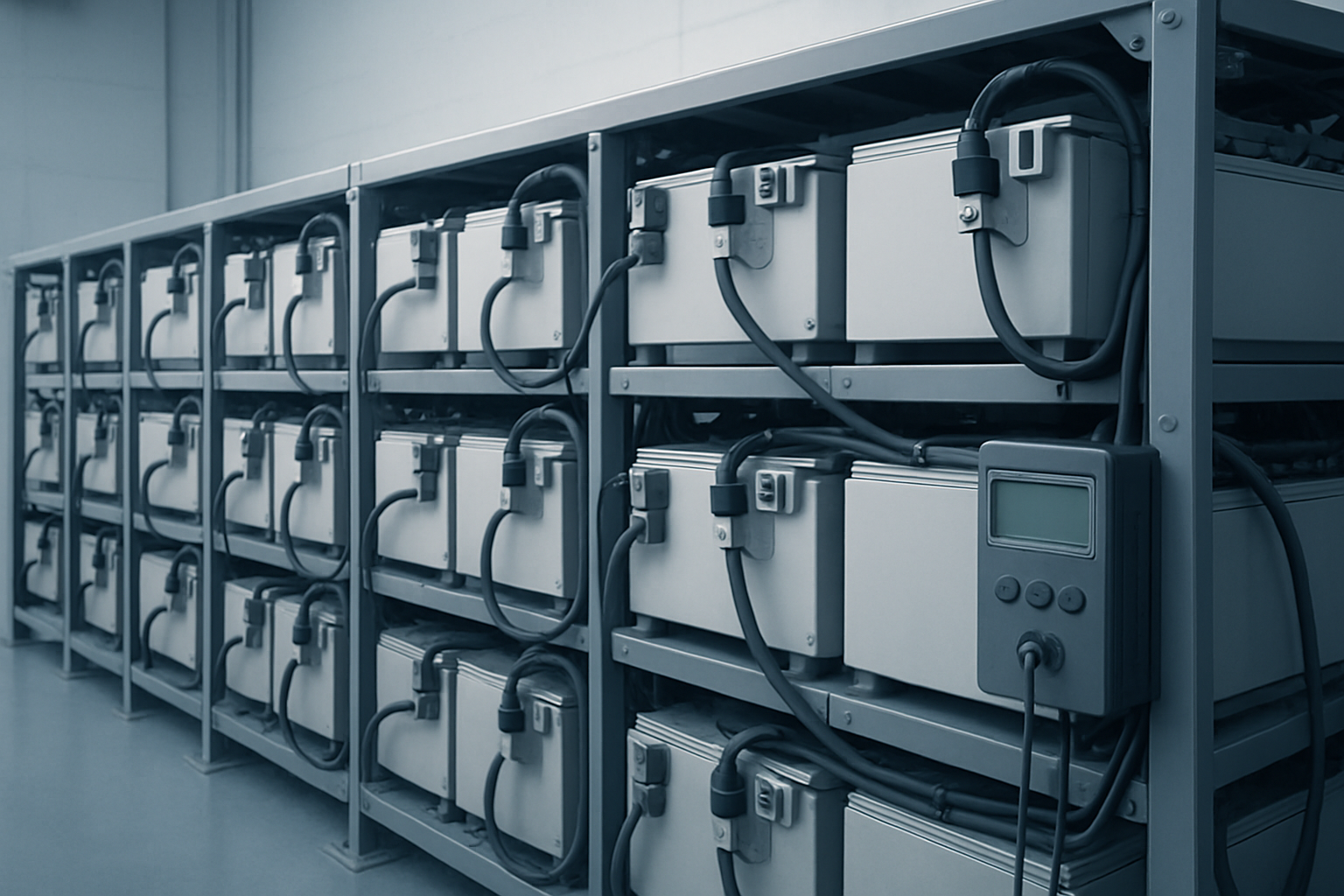
Electrical insulation in industrial battery storage systems (BESS) is essential for the operational safety and longevity of the systems. It prevents dangerous leakage currents and short circuits, protecting against personal injury and property damage. Due to the high voltages and currents in BESS, damaged insulation can lead to malfunctions and catastrophic failures. Strict insulation requirements are particularly crucial in the power electronics, which are responsible for converting and controlling energy flows.
Typical insulation faults in battery storage systems
Insulation faults in BESS systems often arise from mechanical stress, aging, humidity, or manufacturing defects. Typical fault types include breakdowns, leakage currents, cracks, or insufficient insulation layers. Such faults lead to reduced insulation resistance, which in turn increases the risk of arcing, overvoltages, and short circuits. Early detection is therefore crucial to prevent failures and safety hazards.
Differences between AC/DC hipot testing and insulation resistance measurement
The AC/DC hipot test is used to verify electrical insulation under high voltage. Either an alternating voltage (AC) or a direct voltage (DC) is applied to the test unit to verify the insulation's capability at nominal voltage or higher test voltages.
In contrast, insulation resistance measurement measures the ohmic resistance of insulating materials at a defined test voltage. While hypot testing dynamically detects potential faults such as breakdowns by exceeding test voltages, insulation resistance measurement primarily serves as a routine test for evaluating insulation quality.
Both methods complement each other and are important in different phases of development, manufacturing and maintenance.
Testable components of a battery storage system
BESS systems consist of various electrical and electronic components that must be tested for insulation. These include:
- Battery modules and cell assemblies
- Power electronic control and switching devices
- Wiring and terminal blocks
- Housings and protective insulation
Testing these components ensures compliance with electrical safety standards and guarantees the system's operational reliability. Comprehensive insulation testing should be performed, especially for new designs or after repairs.
- Battery modules and cell assemblies
- Power electronic control and switching devices
- Wiring and terminal blocks
- Housings and protective insulation
Application areas of insulation and high-voltage testing in the development and manufacturing process
During the development phase, high-voltage and insulation tests help to validate insulation concepts and material selection, and to identify potential weaknesses early on. In manufacturing, such tests serve as quality control to eliminate defective components or assembly errors.
Regular insulation measurements are also essential in quality assurance and maintenance to detect insulation defects caused by wear and tear and to ensure long-term operational reliability. This sustainably reduces downtime and maintenance costs.
Safety measures during the testing of battery storage systems
BESS testing is performed under high voltages and therefore poses safety risks to personnel and equipment. Key safety measures include:
- Separation and unloading of the test subjects before and after the examination
- Use of protective equipment and safe testing stations
- Compliance with testing procedures and standard requirements
- Use of devices with arc detection and automatic discharge
Comprehensive training and instruction of the testing personnel is essential to guarantee safe testing procedures.
- Separation and unloading of the test subjects before and after the examination
- Use of protective equipment and safe testing stations
- Compliance with testing procedures and standard requirements
- Use of devices with arc detection and automatic discharge
- Training and instruction of the testing personnel
The Techmize TH9310 as an efficient testing solution for BESS components
The Techmize TH9310 is a versatile test instrument ideally suited for insulation and high-voltage testing of battery storage systems. It offers an AC test voltage of up to 5 kV and a DC test voltage of up to 6 kV, making it flexible for a variety of testing requirements. It also enables classic insulation resistance measurement, which serves as a quality indicator.
Particularly noteworthy are its integrated arc detection, which reliably detects and prevents dangerous discharge processes, and the automatic discharge, which improves user safety.
The TH9310 supports the requirements of IEC standards 62933-5-2 and 62933-5-4, without claiming blanket compliance with these standards. Its practical operation and technical features make it the ideal choice for development, manufacturing, and quality assurance processes in the BESS field.
- AC test voltage up to 5 kV
- DC test voltage up to 6 kV
- Insulation resistance measurement
- Integrated arc detection
- Automatic discharge
Frequently Asked Questions
Why is electrical insulation so important in battery storage systems?
Intact electrical insulation prevents short circuits, leakage currents and protects against electric shocks, thus ensuring the operational safety and lifespan of the BESS.
What are typical insulation faults in battery storage systems?
Typical faults include mechanical damage, leakage currents, breakdowns, and reduced insulation resistance due to moisture or aging.
How do AC/DC hipot testing and insulation resistance measurement differ?
Hypot testing dynamically checks the insulation under high voltage using alternating or direct current, while insulation resistance measurement measures the resistance as a quality indicator.
What safety measures are necessary during high-voltage testing?
Key measures include separation and discharge of the test specimens, protective equipment, secured test stations, arc flash detection and trained personnel.


.png)