









€485.00 Net
€577.15 incl. VAT
In Stock, Delivery time: 1-3 days
.jpg)
.jpg)
.jpg)
.jpg)
.jpg)
.jpg)
Description
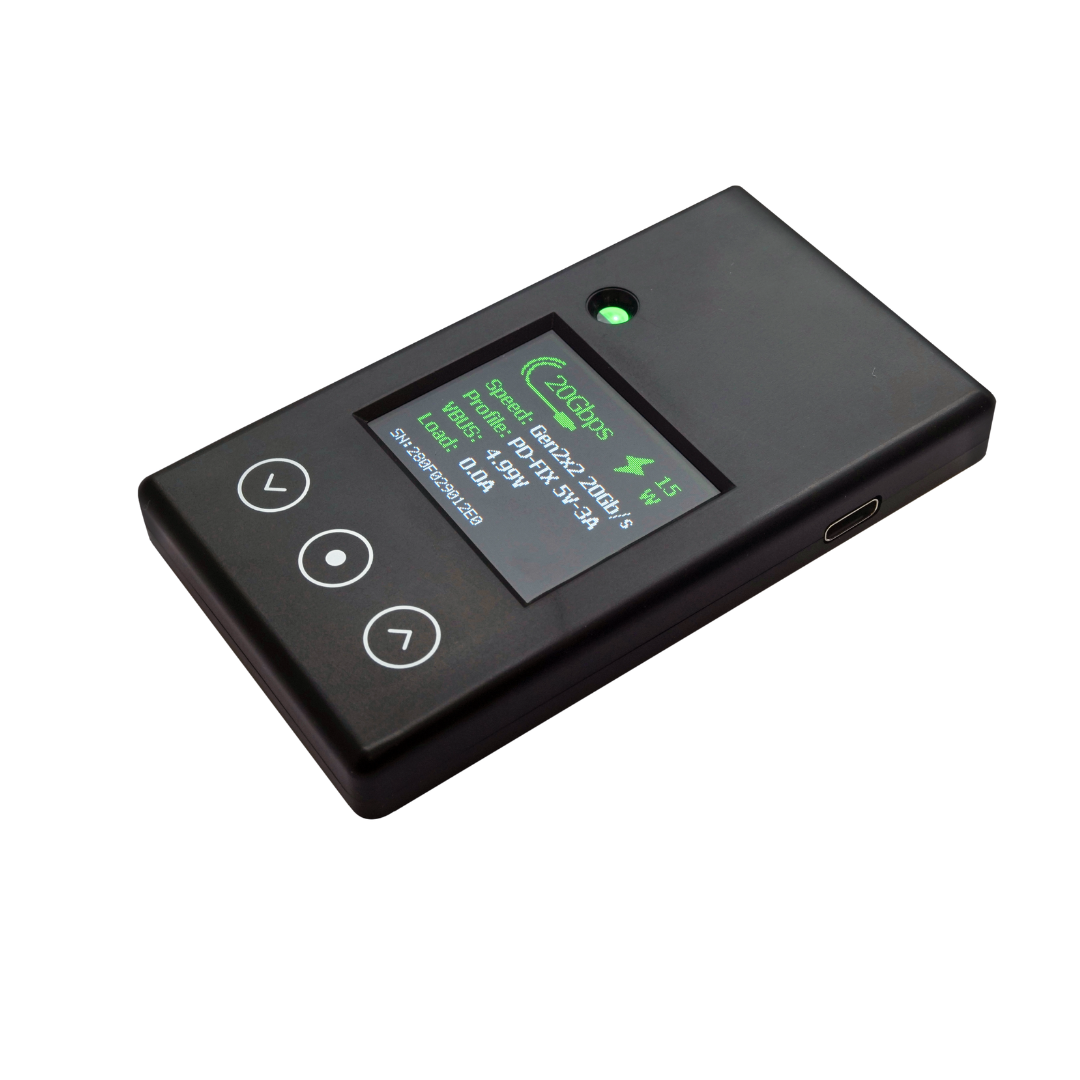
The PASSMARK USB-C 20G Loopback Connector is designed for testing, troubleshooting, and validating USB-C ports and supports USB4 data transfer rates of up to 20 Gb/s. It enables precise verification of bidirectional data transmission and helps ensure that USB ports function reliably and without errors.The loopback connector allows for measuring maximum read and write speeds, identifying data transmission problems, and performing detailed diagnostics of faulty USB ports. By detecting various error types and analyzing their frequency, problems can be precisely located.
This makes the PASSMARK USB-C 20G Loopback Plug an ideal tool for hardware manufacturers, system integrators, service technicians and IT professionals who need fast and reliable testing of USB-C ports.
Key features
- Supports USB4 data transfer rates of up to 20 Gb/s
- Tests the functionality and reliability of USB-C ports
- Verifies error-free data transmission in both directions.
- Measures maximum read and write speeds
- Offers detailed diagnostics for faulty USB ports
- It detects communication errors and tracks their frequency.
- Ideal for fault diagnosis, validation and quality assurance
Speed benchmarking .webp)
Measure the maximum read and write performance of USB ports using high-speed benchmark tests.
The data is transmitted at the highest possible speed to determine the maximum data throughput. The results show both the peak performance and the average transmission rates over the entire test period.
This allows you to validate the actual performance of a USB port and compare it to the expected specifications of USB 3.2 Gen 2x2
Error detection .webp)
Detect and diagnose USB port problems by identifying data transmission errors during testing.
The loopback test verifies that the data sent by the host is returned exactly, thus ensuring complete data integrity.
All errors are logged, including the number and type of error, which allows for the targeted identification of unreliable or faulty USB ports.
Reliability and burn-in tests .webp)
Perform extended stress tests by subjecting the USB port to a continuous data transfer load.
This allows for the evaluation of long-term stability and the detection of sporadic or temperature-related errors that may not occur during short tests.
Ideal for burn-in tests and for validating system reliability under continuous load.
Port profiling .webp)
Analyze the full capabilities of a USB port using USB Power Delivery (PD) communication.
The device can read the advertised performance profiles, including supported voltages, current limits, and maximum available power.
Furthermore, specific voltage levels can be triggered (up to 48 V with EPR), enabling comprehensive testing across all supported power modes.
Cable detection 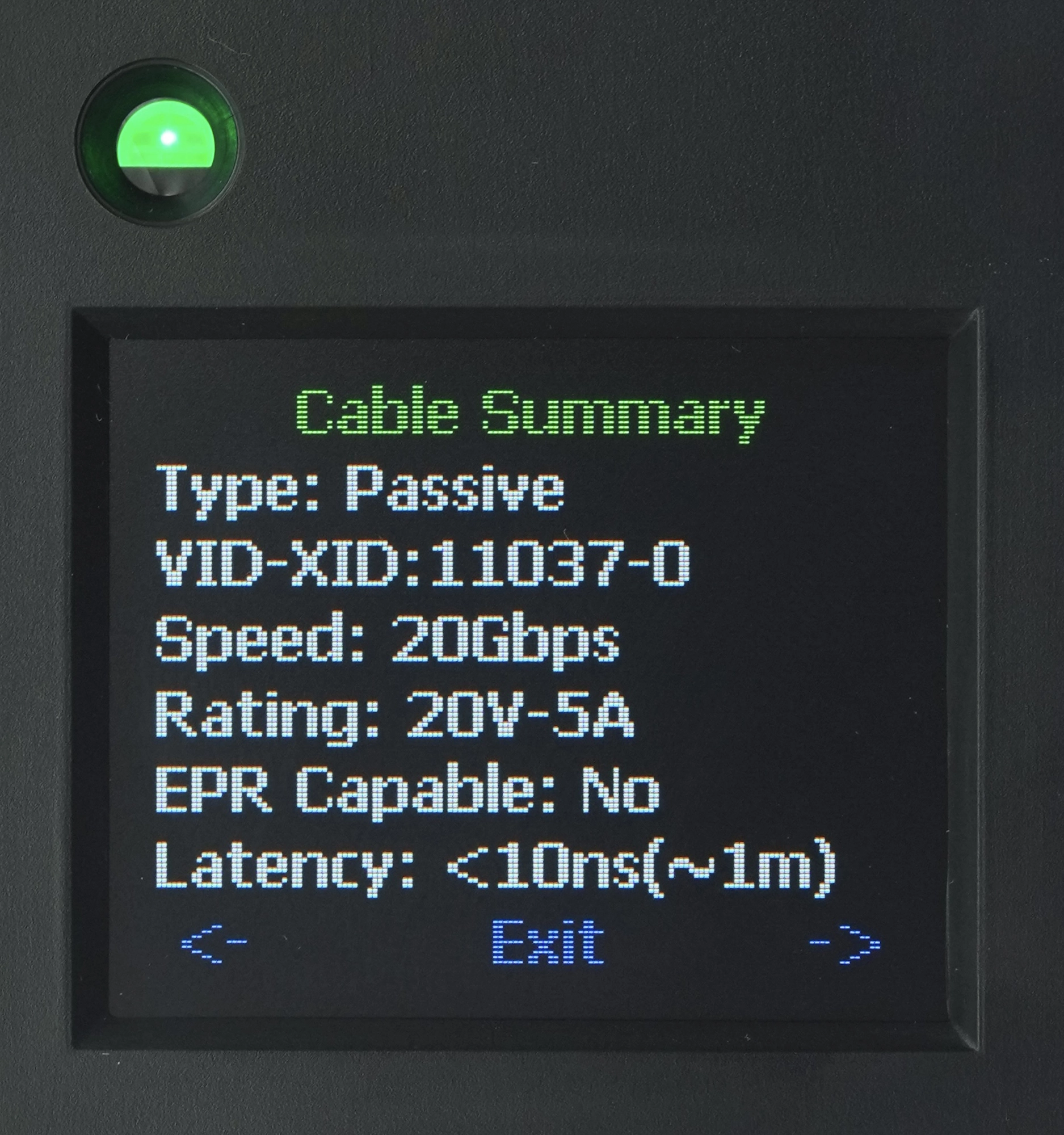
Retrieve detailed information about connected USB-C cables via the USB Power Delivery protocol.
This includes identification data, supported data transfer rates, and available performance characteristics. This ensures that the cables used are suitable for high-speed data transmissions and high-power applications.
Software, API automation & Firmware updates
PC software
The USB-C 20G loopback comes with a dedicated Windows application for controlling the device and performing all types of tests. The software offers an intuitive user interface for configuring tests, selecting speeds and voltages, and viewing results. Outputs can be displayed as logs or graphs and saved for further analysis.
API support for automation
An API is available for communication between the device and external software. This allows users to create custom scripts and automate test sequences. This is particularly helpful for integration into production lines or extensive validation and testing environments.
Updatable firmware
The device supports firmware updates to provide continuous improvements and enhancements. This ensures compatibility with future USB standards while allowing for the addition of new features and optimizations.
This helps to protect the long-term investment in the test platform.
Application areas 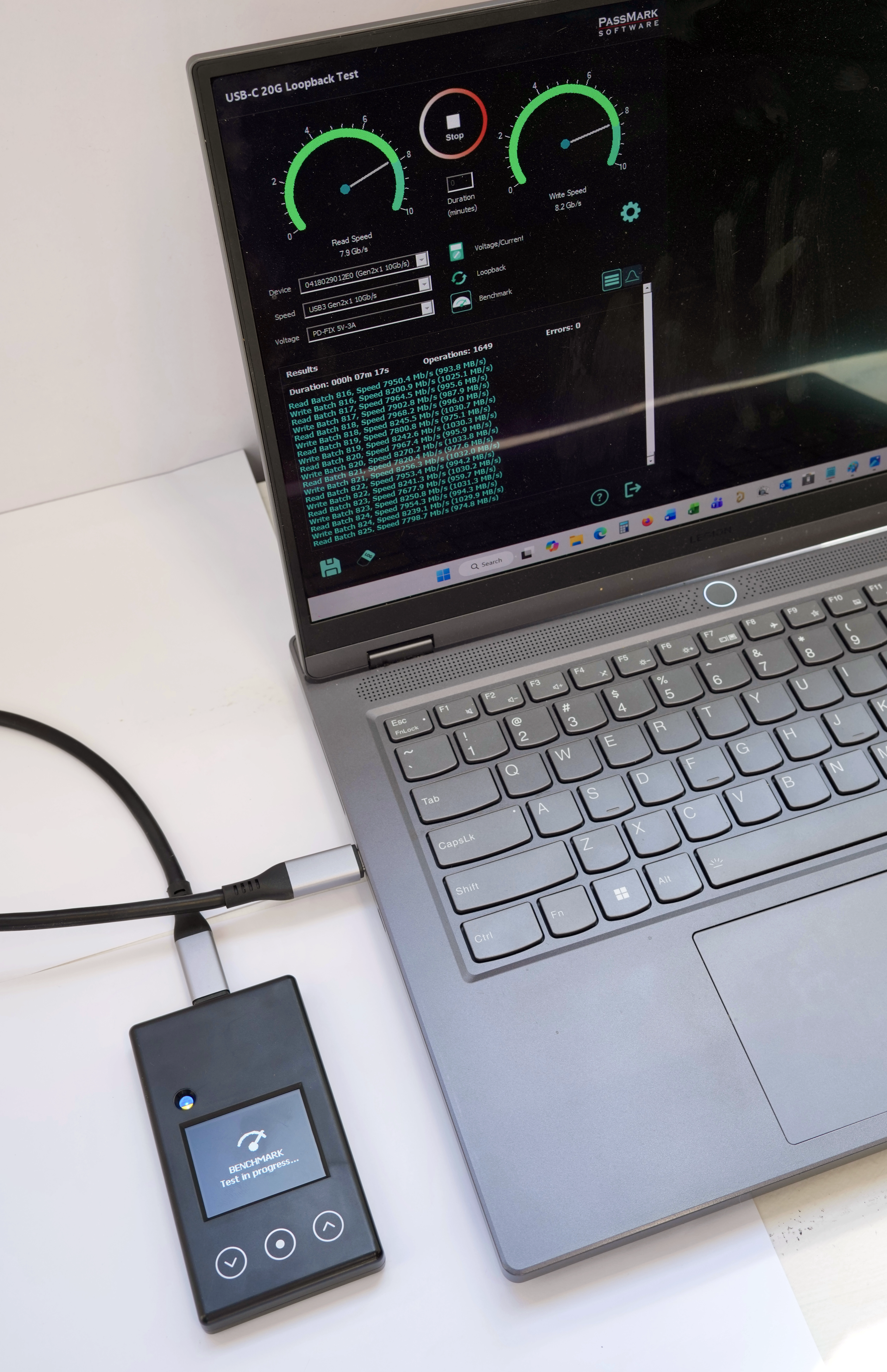
Manufacturing & Quality Assurance: High-volume testing of USB connectors in production environments to ensure consistently high quality.
Compliance testing: Verification of compliance with USB specifications, including data transfer speed, power supply, and compatibility.
IT diagnostics & repair: Rapid assessment of the condition and performance of USB ports as part of maintenance and repair work.
Device connections 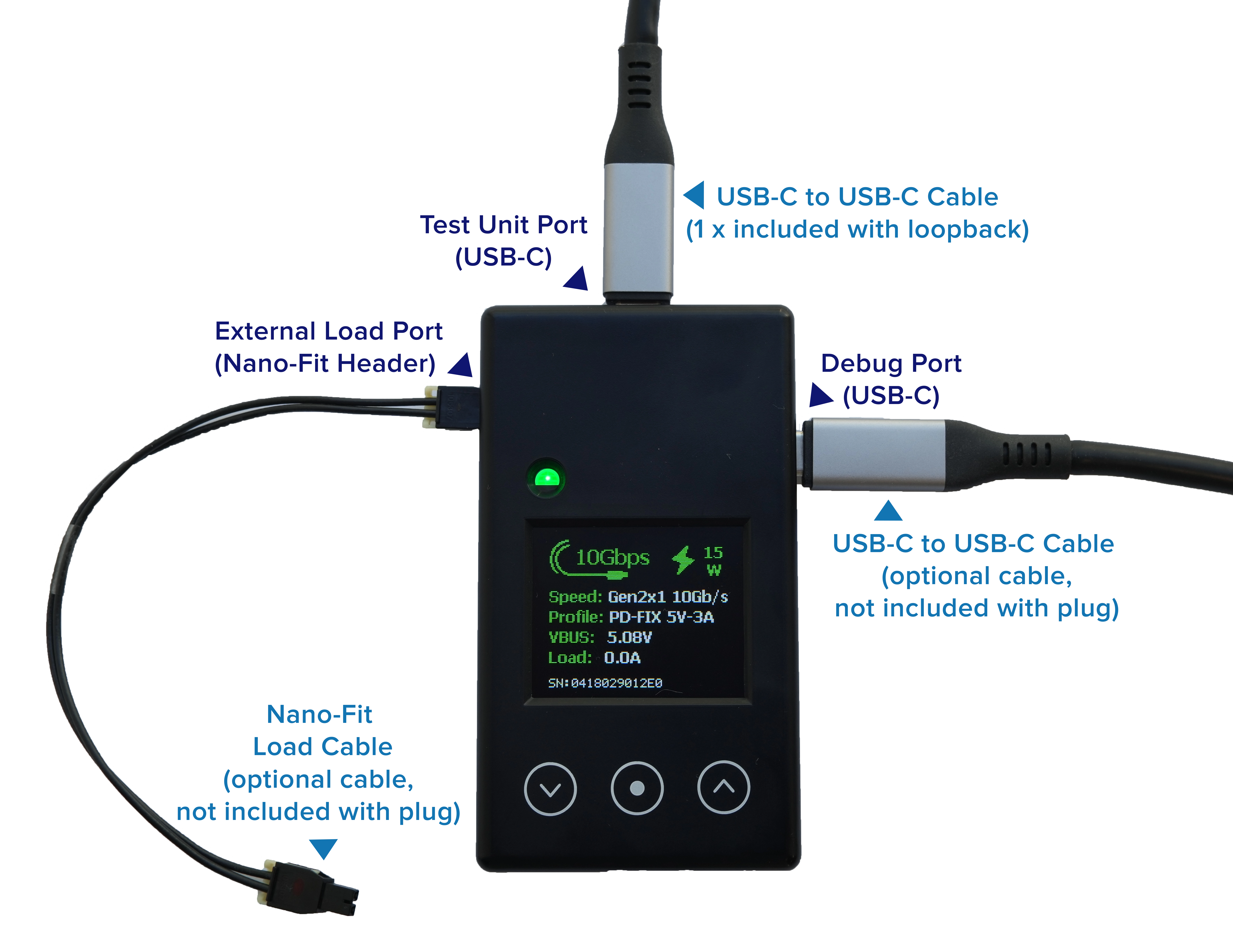
Test Unit Port:
This USB-C connector is connected to the USB port being tested. Once connected, the test unit is powered via the USB port and the USB 20Gbps Loopback Plug starts automatically.
External Load Port:
Allows an additional load to be applied to the USB cable for testing under real-world operating conditions. Ideal for simulating various power supply scenarios. The connector features integrated overcurrent protection and can be controlled via software. The Nano-Fit load cable is available separately and is not included.
Debug port:
Optional connection for a stable power supply or for connecting a second system for logging and diagnostic purposes. It enables independent operation of the device, allowing diagnostics to be performed even with faulty or unstable test ports. Furthermore, it improves the reliability of cable detection by eliminating power-on delays.
Preliminary overvoltage check with the USB-C SOS .webp)
Protect your USB-C loopback connector by pre-testing potentially faulty USB-C ports for overvoltage using the PASSMARK USB-C SOS short circuit tester. This robust and easy-to-use test plug provides a visual indication of the applied port voltage within seconds, protecting your USB-C loopback connector from potential damage. This is especially beneficial during testing in production environments.
If the USB-C SOS pre-test is successful, you can then proceed with a more comprehensive fault diagnosis using the USB-C 20G loopback connector and the associated software.
Technical Data
| Model specification | 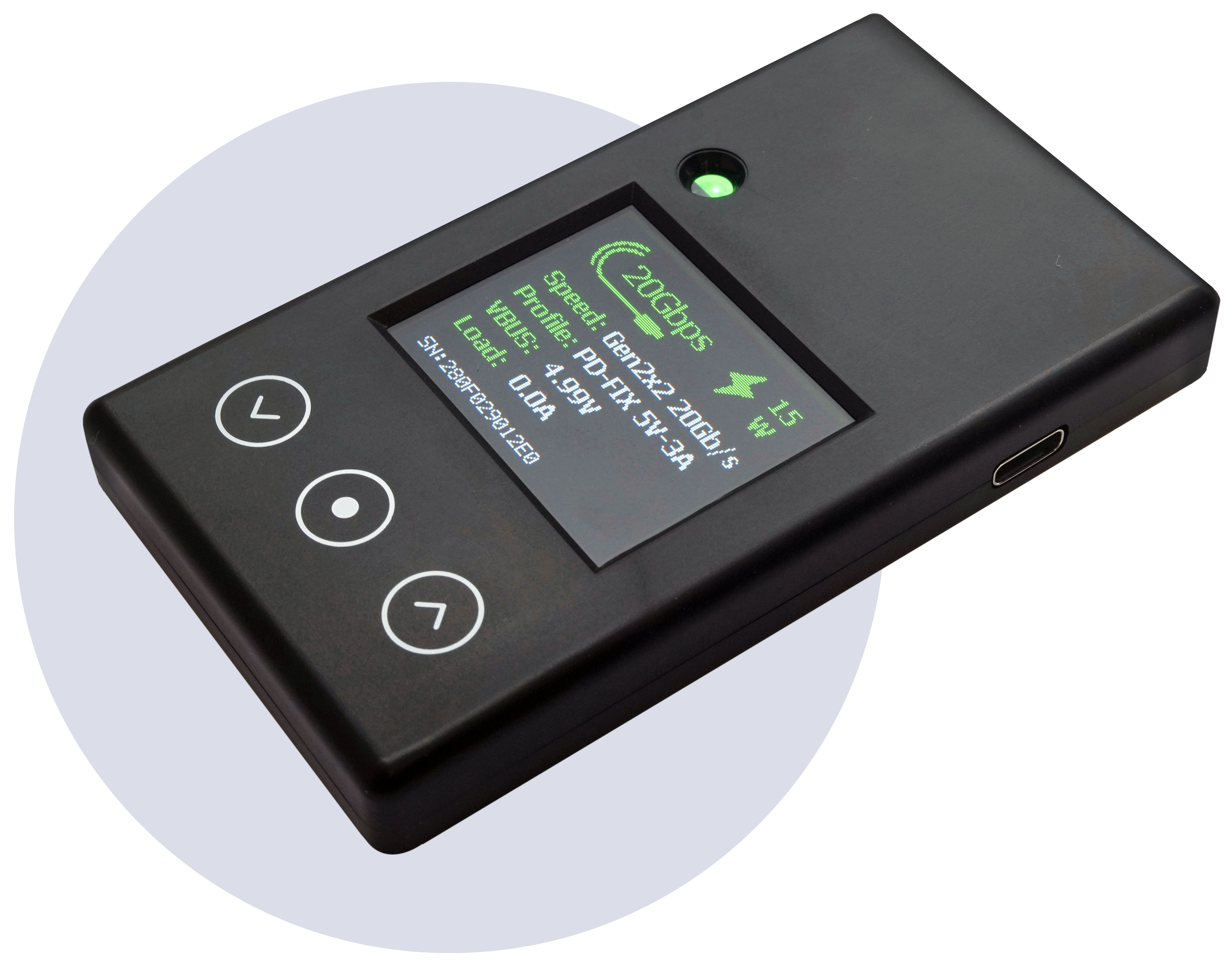 USB-C 20G loopback plug |
|---|---|
| Article number | PM320 |
| USB standard | USB 3.2 Gen 1 USB 3.2 Gen 2 USB 3.2 Gen 1x2 USB 3.2 Gen 2×2 USB Power Delivery Specification Revision 3.1 |
| Plug and Play | Compatible and compliant |
| Physical connection | Test port: USB-C Debug port: USB-C External Load port: Nano-Fit Header |
| Included Cables | High-quality USB-C to USB-C cable (supporting up to 80Gbps and 240W) with length of 0.5m |
| USB transfer modes | Bulk and Isochronous |
| Voltage (Test Port) | 4.5V - 48.0V (No external power supply is required) |
| Voltage (Debug Port) | 4.5V - 5.5V |
| Voltage Accuracy (Test Port) | +/-2% |
| Current (Test Port) | 80mA @ 5V (idle) 350mA @ 5V (with only speed test running) |
| Current (Debug Port) | When device is not powered by Test port: 80mA @ 5V (idle) 350mA @ 5V (with only speed test running) |
| External Load Current Output | 3A max without concurrent data testing 1A max with concurrent data testing |
| External Load Current Accuracy | +/-10% when current draw is at or above 500mA +/-20% when current draw is from 100mA - 500mA |
| Clock frequency | 24MHz |
| Device storage | 256Mbit |
| Housing stability | Black ABS plastic |
| Size | 99mm x 56mm x 14mm (3.9 x 2.2 x 0.6 inches) |
| Weight | 59g (2.1oz) |
| Indicators | White LED = Power from USB bus |
| ESD immunity | IEC 61000-4-2 Level 4 Protection (Contact Voltage: 8kV; Air Gap Voltage: 15kV) |
| Storage temperature | -30 ºC to 80 ºC |
| Operating temperature | -10°C to 40°C |
| Top speed | 10Gbps per lane, 20Gbps aggregate |
| RoHS (lead-free) | Yes, see compliance page |
Documentation
Additional products


